

How it works
When you connect data sources to Seam, we automatically:- Ingest data from each connected system
- Deduplicate records across sources
- Enrich with additional context and signals
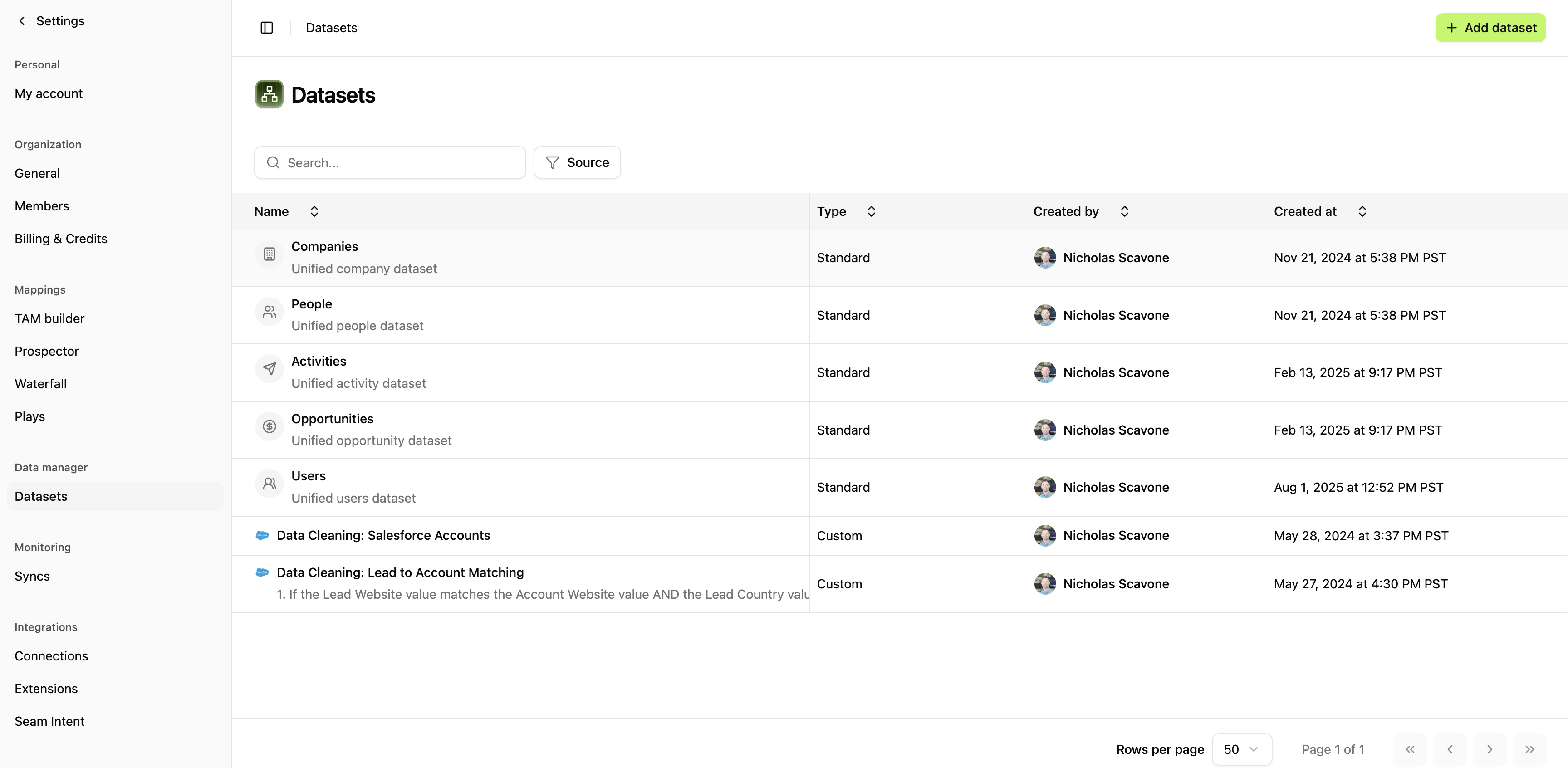
- Unify into five core datasets
The five core datasets
Companies
Unified company datasetAll account-level data including firmographics, technographics, fit scores, intent signals, and engagement history.
People
Unified people datasetAll contact-level data including role, seniority, engagement activities, and buying committee membership.
Activities
Unified activity datasetAll engagement activities including website visits, email opens, meeting attendance, content downloads, and ad interactions.
Opportunities
Unified opportunity datasetAll deal data including stage, value, close date, and attribution to campaigns and touchpoints.
Users
Unified users datasetYour internal team members including reps, marketers, and their account assignments and territories.
Data flow
Here’s how data flows from your sources into the unified model:Key benefits
Single source of truth
Single source of truth
No more conflicting data across systems. Seam resolves duplicates and creates one unified record for each company and person.
Automatic enrichment
Automatic enrichment
Seam enriches your unified data with intent signals, fit scores, and AI research—giving you more context than any single source provides.
Constantly updated data
Constantly updated data
Changes in your CRM or other systems sync to Seam every few hours, and Seam pushes enriched data back to your tools.
Cross-system intelligence
Cross-system intelligence
Connect activities across systems. See which accounts engaged with ads, visited your website, and received outreach—all in one place.